
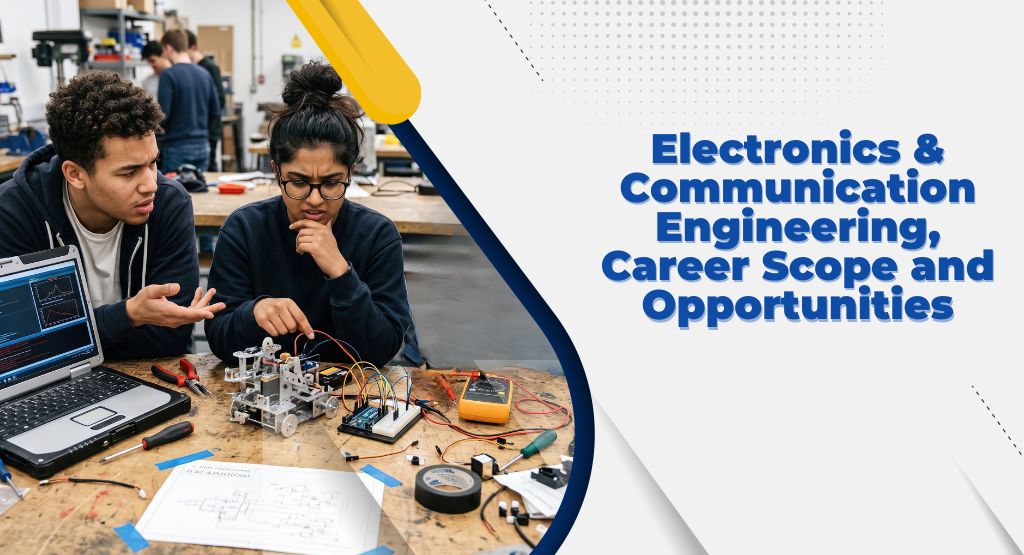
Electronics & Communication Engineering (ECE) is a technology-driven engineering discipline that combines electronics, communication systems, embedded technology, wireless communication, IoT, VLSI, robotics, and emerging areas such as artificial intelligence. With applications across telecommunications, semiconductor technology, consumer electronics, automotive systems, defence, automation, and smart devices, ECE offers diverse career opportunities for engineering graduates.
For students exploring Electronics & Communication Engineering in Jaipur, choosing an institution with strong laboratories, industry exposure, research opportunities and placement support can make an important difference. Poornima Group of Colleges offers ECE as a B.Tech programme at its Jaipur campuses and has developed academic facilities and Centres of Excellence aligned with emerging technologies.
Why Choose Electronics & Communication Engineering?
Almost every modern technology depends on electronics and communication. Smartphones, 5G networks, satellites, electric vehicles, industrial automation, wearable devices, smart homes, and connected machines all require professionals who understand how electronic hardware and communication technologies work together.
An ECE degree can help students build knowledge in areas such as:
- Analog and digital electronics
- Embedded systems and microcontrollers
- VLSI and semiconductor design
- Wireless and advanced communication
- Signal processing
- Internet of Things (IoT)
- Robotics and automation
- Networking and telecommunications
- Artificial intelligence applications
- Control and instrumentation
This multidisciplinary nature makes ECE relevant to both core engineering companies and technology-driven organisations.
Electronics & Communication Engineering Career Scope
The career scope after B.Tech in ECE extends beyond traditional electronics companies. Graduates can work in technical, research, software, communication, and product-development roles.
Popular Career Opportunities After ECE
Depending on their interests and skills, graduates can explore roles such as:
- Electronics Engineer
- Embedded Systems Engineer
- VLSI Design Engineer
- Network Engineer
- Communication Engineer
- IoT Engineer
- RF Engineer
- Hardware Design Engineer
- Automation Engineer
- Field Test Engineer
- Research and Development Engineer
- Electronics and Communication Consultant
Students can also pursue M.Tech, MBA, specialised certifications, research programmes or competitive examinations after completing their B.Tech.
ECE and Emerging Technology Trends in 2026
The future of ECE is closely connected with several fast-growing technology domains. Semiconductor manufacturing, AI-enabled devices, advanced wireless networks, robotics, and connected systems are creating new areas for engineering talent.
Top 2026 Electrical Engineering Trends
Although Electrical Engineering and ECE are distinct disciplines, several technology areas overlap. Top 2026 Electrical Engineering Trends include smart automation, electric mobility, industrial IoT, renewable-energy systems, and intelligent control technologies. ECE graduates can also contribute to these ecosystems through embedded systems, sensors, communication, and control technologies.
India’s semiconductor ecosystem is also expanding. Recent industry reporting indicates that India’s semiconductor market is projected to grow substantially over the coming decade, driven by consumer electronics, automotive technology, industrial applications, AI and data centres. This creates potential opportunities for professionals with semiconductor, electronics, and chip-design skills.
Why Poornima Group for ECE?
For students comparing the best engineering colleges in Jaipur, academic ecosystem and industry relevance are important factors to consider. Poornima Group of Colleges has more than three decades of engineering education experience and offers B.Tech programmes through Poornima College of Engineering (PCE) and Poornima Institute of Engineering & Technology (PIET).
The institution’s published information highlights:
| Key Fact | Poornima Group |
| Engineering education experience | 3+ decades |
| Highest package reported | ₹15.47 LPA for the 2026 batch |
| Average package reported | ₹5.25 LPA over the last 3 years |
| Placements reported | 5,100+ in the last 3 years |
| Recruiters reported | 300+ in the last 3 years |
| Alumni network | 35,000+ |
| Funded DST projects | 63 |
| Placement drives | 350+ |
| Campuses | 3 |
For students seeking a B.Tech institute in Rajasthan, these institutional indicators provide useful information for evaluating academic and career infrastructure.
Research, Innovation and Industry Exposure
Modern engineering education requires more than classroom learning. Students need opportunities to experiment, build projects, and understand real-world applications. Poornima’s ECE ecosystem includes an RTU-recognised Centre of Excellence in Advanced Wireless Communication. The institution also highlights Centres of Excellence in areas such as AI and Big Data, Digital Manufacturing, Robotics & AI, along with AICTE IDEA Labs.
The ECE programme covers contemporary areas including VLSI design, embedded systems, IoT, wireless communication, robotics and artificial intelligence, alongside core electronics and communication subjects.
Students can further strengthen their practical knowledge through internships, projects, technical events, industry interactions and hands-on laboratory work.
Placement and Career Preparation
Placement preparation is another important consideration when selecting the best engineering college. Poornima Group reports more than 5,100 placements over the last three years, 300+ recruiters, and an average package of ₹5.25 LPA during the same period. The institution also provides internship opportunities designed to give students exposure to workplace environments and practical applications of classroom concepts.
However, students should remember that individual career outcomes depend on academic performance, technical skills, communication abilities, internships, projects, interview preparation, and industry requirements.
ECE vs Other Engineering Options
Students often compare ECE with other engineering branches before admission.
| Area | ECE | Electrical Engineering | Computer Engineering |
| Electronics | Strong focus | Moderate | Limited |
| Communication | Strong focus | Limited | Limited |
| Embedded Systems | Strong | Moderate | Moderate |
| Software | Good scope | Good with skills | Strong |
| IoT | Strong | Strong | Strong |
| VLSI | Strong | Related | Limited |
| Power Systems | Limited | Strong | Limited |
| AI Integration | Growing | Growing | Strong |
Students interested in electronics, communication, hardware, embedded technology, and connected devices may find ECE particularly relevant.
Those specifically searching for B.Tech in Electrical Engineering in Rajasthan should compare curriculum, laboratories, faculty expertise, and industry exposure separately, because Electrical Engineering has a different academic and career focus.
Faculty Insight: What Should Students Focus On?
From an academic perspective, ECE students should not depend only on their university syllabus. A strong learning journey combines fundamentals with practical skills.
Students should focus on:
- Building strong fundamentals in electronics and communication.
- Learning programming languages such as C, C++, or Python.
- Developing embedded-system and microcontroller skills.
- Exploring IoT, VLSI, robotics, or wireless communication.
- Completing meaningful technical projects.
- Participating in internships and industry-oriented activities.
- Developing communication and problem-solving skills.
This combination can make graduates more adaptable as technology changes.
Pros and Cons of Choosing ECE
Pros
- Wide range of career opportunities
- Strong relevance to emerging technologies
- Opportunities in both core and technology sectors
- Scope in semiconductor and embedded industries
- Strong connection with IoT, robotics, and wireless technologies
- Higher-study and research opportunities
Things Students Should Consider
- Core electronics requires strong mathematics and technical fundamentals.
- Hardware-oriented careers may require specialised practical skills.
- Students need continuous learning because technology changes rapidly.
- Placement outcomes vary according to individual skills and market conditions.
FAQs About Electronics & Communication Engineering
What is Electronics & Communication Engineering?
ECE is an engineering discipline covering electronics, communication systems, embedded systems, wireless technologies, signal processing, IoT, and related technologies.
Is ECE a good career option in 2026?
ECE remains relevant because electronics, wireless communication, embedded systems, semiconductor technology, IoT, and intelligent devices are important parts of modern technology.
What jobs can I get after B.Tech in ECE?
ECE graduates can pursue roles such as Electronics Engineer, Embedded Engineer, VLSI Engineer, Network Engineer, Communication Engineer, IoT Engineer, Hardware Engineer, and R&D Engineer.
Is Electronics & Communication Engineering available at Poornima Group?
Yes. Poornima Group offers B.Tech in Electronics & Communication Engineering through its engineering institutions in Jaipur, subject to the current programme and admission structure.
What should I check before choosing an ECE college?
Students should compare accreditation, academic curriculum, faculty, laboratories, industry exposure, internships, research opportunities, placement data, campus facilities and alumni outcomes before making a decision.
Conclusion
Electronics & Communication Engineering offers a broad pathway into the technologies powering connected and intelligent systems. From semiconductor design and embedded systems to IoT, wireless communication, robotics and AI-enabled electronics, the field continues to evolve with the technology industry. For students searching for private engineering colleges in Rajasthan, a meaningful college comparison should go beyond rankings and focus on curriculum, practical learning, research, infrastructure, internships, and career preparation.
Students looking for Electronics & Communication Engineering in Jaipur can explore the programme, understand the admission requirements, and evaluate how its curriculum and learning opportunities align with their long-term career goals. For students comparing options for the best B. Tech placement college in Rajasthan, the most useful approach is to examine verified placement data alongside academics, skills development, and industry exposure.
Read More: B.Tech CSE in Jaipur: How to Choose the Right Engineering College?