
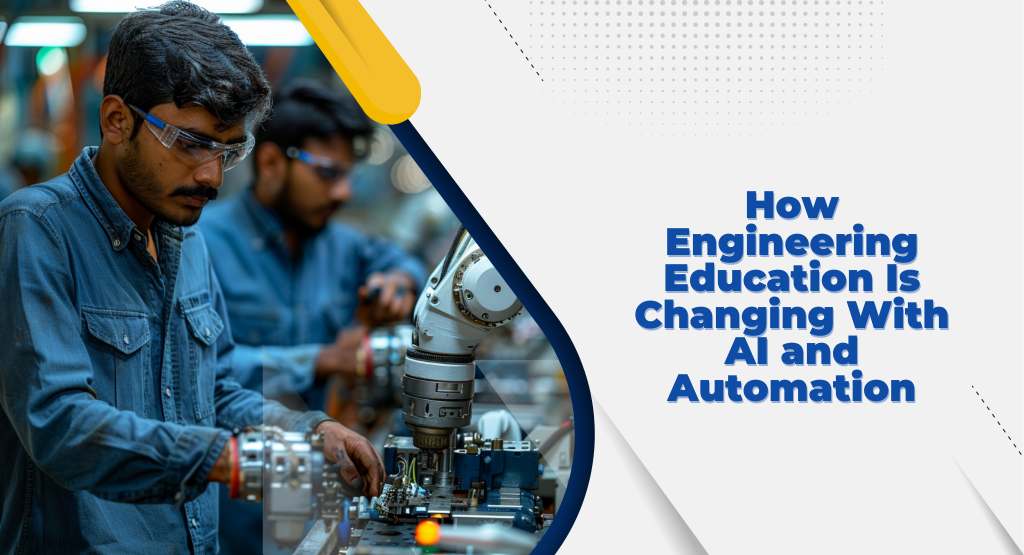
Engineering education is undergoing a major transformation due to AI and Automation, Data Science, Robotics, and Industry 4.0 technologies. Modern engineering programs are no longer limited to classroom theory. Today, students are expected to develop skills in AI and automation, machine learning, automation systems, data analytics, problem-solving, and innovation. Institutions like Poornima Group of Colleges are adapting their curriculum to prepare students for the evolving demands of the global workforce.
The New Era of Engineering Education
The world is changing faster than ever. Technologies that seemed futuristic a decade ago are now part of everyday life. From AI-powered virtual assistants and self-driving vehicles to automated manufacturing systems and intelligent healthcare solutions, technology is reshaping industries across the globe.
As a result, engineering education is also evolving. Traditional learning methods are being complemented with practical projects, interdisciplinary learning, innovation labs, and industry-integrated programs.
Students entering engineering today are preparing for careers that may not have existed a few years ago.
Key Facts About AI and Engineering Education
| Area | Traditional Engineering | Modern Engineering Education |
| Learning Style | Theory-focused | Industry-focused |
| Technologies | Core engineering concepts | AI, Automation, Data Science |
| Skill Development | Technical knowledge | Technical + Digital Skills |
| Industry Exposure | Limited | High |
| Career Readiness | Graduation-focused | Future-ready workforce |
Why AI and Automation Are Changing Engineering Education
1. Industry Demands Have Changed
Companies are increasingly adopting automation and intelligent systems to improve efficiency and decision-making. Employers now seek graduates who understand:
- Artificial Intelligence
- Machine Learning
- Data Analytics
- Robotics
- Cloud Computing
- Internet of Things (IoT)
This shift has encouraged engineering institutions to redesign their curriculum.
2. Learning Is Becoming More Practical
Engineering students today are expected to build solutions rather than simply learn concepts.
Modern education focuses on:
- Live industry projects
- Hackathons
- Innovation challenges
- Research opportunities
- Industry internships
This approach helps students gain hands-on experience before entering the workforce.
3. Emerging Specializations Are Growing Rapidly
Programs such as B.Tech in AI & Data Science have gained significant popularity because they directly align with future industry requirements.
Students pursuing AI-focused engineering programs learn:
- Artificial Intelligence
- Machine Learning
- Deep Learning
- Data Science
- Predictive Analytics
- Natural Language Processing
These skills are increasingly valuable across industries.
How Poornima Group of Colleges Is Preparing Students for the Future
As one of the recognized names among the best engineering colleges in Jaipur, Poornima Group of Colleges focuses on creating industry-ready engineers through innovation-driven education.
The institution offers an academic environment that combines:
Industry-Oriented Curriculum
Students are exposed to emerging technologies and real-world engineering applications.
Innovation and Research
Research initiatives, technical projects, and innovation activities help students develop practical problem-solving abilities.
Modern Infrastructure
Advanced laboratories, digital learning platforms, innovation centers, and collaborative learning spaces support experiential learning.
Placement and Career Development
Industry interaction, training programs, internships, and placement support help students prepare for competitive careers. For students seeking admission through reap counselling, Poornima continues to be considered among the preferred destinations for technical education in Rajasthan.
Student Perspective: What Today’s Engineers Need
Modern engineering students understand that success requires more than academic performance.
Today’s engineers need:
- Adaptability
- Critical thinking
- Digital literacy
- Communication skills
- Innovation mindset
- AI awareness
Students who develop these competencies are better positioned for long-term career success.
Faculty Insight
Engineering education is no longer solely about teaching technology. It is about teaching students how to continuously learn, adapt, and innovate as technologies evolve.
Institutions that integrate AI and automation and emerging technologies into their learning ecosystem provide students with a significant advantage in the job market.
Why Choosing the Right Engineering College Matters
When selecting a B.Tech institute in Rajasthan, students should evaluate:
- Academic quality
- Industry exposure
- Placement opportunities
- Innovation ecosystem
- Research culture
- Infrastructure
- Emerging technology programs
Many students researching the top 5 engineering colleges in Jaipur specifically look for institutions that emphasize AI-driven education and future-ready skills.
Additionally, institutions operating within an autonomous college by RTU ecosystem often enjoy greater flexibility in curriculum design, allowing them to introduce industry-relevant content more effectively.
AI and Automation: Pros and Challenges
Benefits
- Better career opportunities
- Higher industry demand
- Improved problem-solving skills
- Exposure to cutting-edge technologies
- Enhanced innovation capabilities
Challenges
- Continuous learning is required
- Rapid technology changes
- Increased competition
- Need for interdisciplinary skills
Students who embrace lifelong learning can successfully overcome these challenges.
Engineering Admissions and Future Opportunities
With growing interest in AI-focused programs, students are increasingly exploring options to secure a B. tech seat through REAP 2026. Engineering institutions that offer future-oriented programs, strong industry engagement, and practical learning experiences are likely to attract the next generation of innovators and technology leaders.
Conclusion
AI and automation are redefining engineering education across India and the world. Future engineers must be prepared to work with intelligent systems, analyze data, automate processes, and develop innovative solutions for complex challenges.
Poornima Group of Colleges continues to align its educational approach with emerging industry requirements by promoting innovation, research, practical learning, and technology-driven education. As engineering careers evolve, institutions that embrace AI-focused learning will play a crucial role in shaping tomorrow’s workforce.
Frequently Asked Questions (FAQs)
What is the impact of AI on engineering education?
AI is making engineering education more practical, technology-focused, and industry-oriented.
Why is B.Tech in AI & Data Science becoming popular?
The growing demand for AI professionals has increased interest in specialized AI-focused programs.
Do engineers need to learn AI in the future?
Yes. AI knowledge is becoming valuable across multiple engineering disciplines.
What skills are important in modern engineering careers?
Programming, data analysis, automation, problem-solving, and communication skills are highly important.
How does automation affect engineering jobs?
Automation changes job roles but also creates new opportunities requiring advanced technical skills.
What should students look for in a B.Tech institute in Rajasthan?
Academic excellence, placements, infrastructure, industry exposure, and emerging technology programs.
Is practical learning important in engineering?
Yes. Practical experience helps students apply concepts to real-world challenges.
How can students prepare for AI-driven careers?
By learning programming, data science, machine learning, and participating in projects and internships.
What is REAP counselling?
REAP counselling is the admission process used by eligible students seeking engineering admissions in Rajasthan.
Why do students choose Poornima Group of Colleges?
Students choose Poornima Group of Colleges for quality education, innovation opportunities, industry exposure, and career-focused learning.
To Know More: What Is the Future Scope of Artificial Intelligence in India